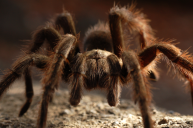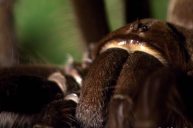
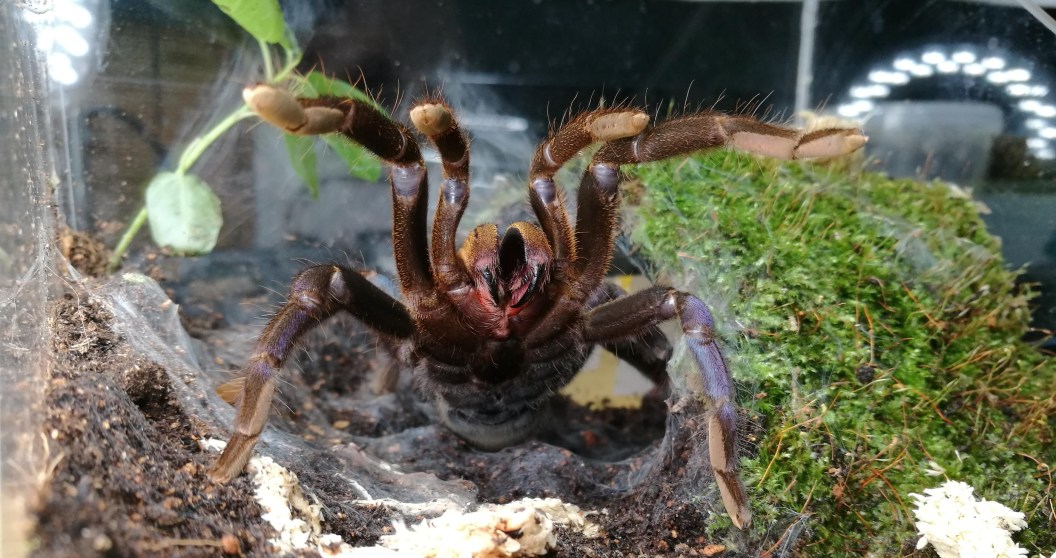
Add this to the list of jobs I never want to have. I am not a big fan of spiders in general, so the thought of being anywhere near a massive spider like a tarantula has my skin crawling. However, there are people out there who are braver than I and make a living out of studying these creatures. Recently, scientists were observing tarantula hunting behaviors, and they discovered something interesting in the process.
Scientists Learn Something Interesting About Tarantula Hunting Behaviors
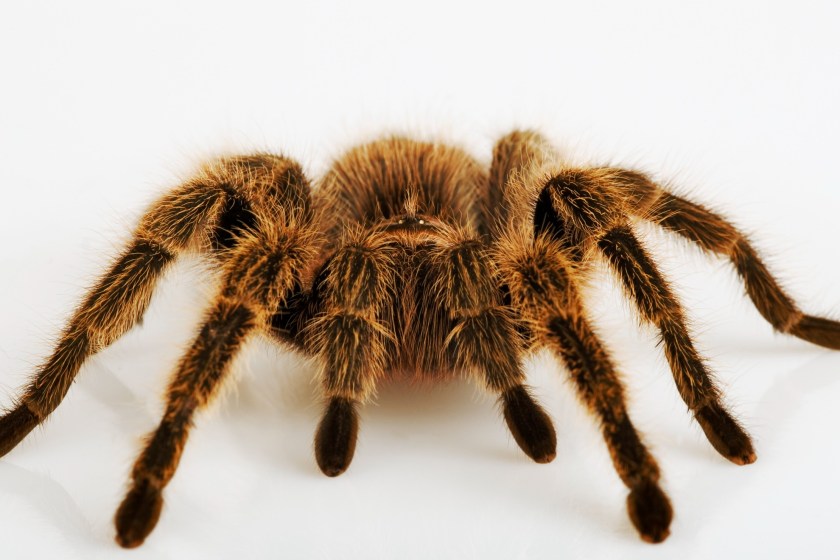
Getty Image by Martin Harvey
As if these giant spiders were not creepy enough because of their size, it now appears they are relatively smart, too. According to their findings, these scientists believe that tarantulas are capable of learning and memory when it comes to their hunting techniques. Discover Wildlife shared that the researchers "studied nine cases of the movement and hunting behavior of arboreal (tree-dwelling) and fossorial (subterranean) tarantulas across North and South America."
During two observations, they observed the tarantulas leaving their retreats to hunt in more favorable areas. Specifically, they noticed that the tarantulas would gravitate towards places with artificial light sources. The thought was that they preferred those locations because artificial light attracts more bugs.
Those that lived in burrows also demonstrated similar behaviors. However, rather than gravitating towards artificial light, those trantulas showed a slightly different hunting behavior. Instead, they "scaled trees of up to 12 meters, with the researchers concluding that they may have been foraging in the tree canopy."
Scientists used to assume that the burrowing spiders climbed trees only to avoid flooding; however, these tarantulas also climbed trees during the dry season. Thus proving that perhaps there were just better food sources high above.
Do Tarantulas Have Spatial Awareness?
All of these observations about tarantulas' hunting behaviors lead the researchers to believe that they are smarter than we originally thought. Additionally, they argue that "their observations indicate that the tarantulas may have learned, retained, and applied information from previous experiences to adapt their hunting behavior."
This is known as spatial learning, and it is not the first time scientists have observed this behavior in tarantulas. The outlet shared that arboreal tarantulas displayed spatial learning when they learned to "avoid unpleasant stimuli, navigate complex mazes, and remember spatial locations over time."
While it is currently unclear how tarantulas actually navigate the world around them —whether it is through landmarks and visual inputs or internal body cues — it is clear that these creatures are far smarter than people originally thought.