Authorities recently discovered a radioactive wasp nest in South Carolina. It was discovered in South Carolina at the site that made materials for nuclear bombs. One South Carolina official is angry that the cause wasn't addressed.
I didn't have radioactive wasps on my 2025 bucket list, but honestly, at this point, nothing surprises me. The U.S. Department of Energy released a report about the surprising incident. They said they found a wasp nest with "legacy contamination" on a stanchion. It was located at their Savannah River site.
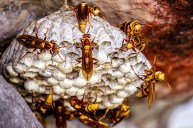
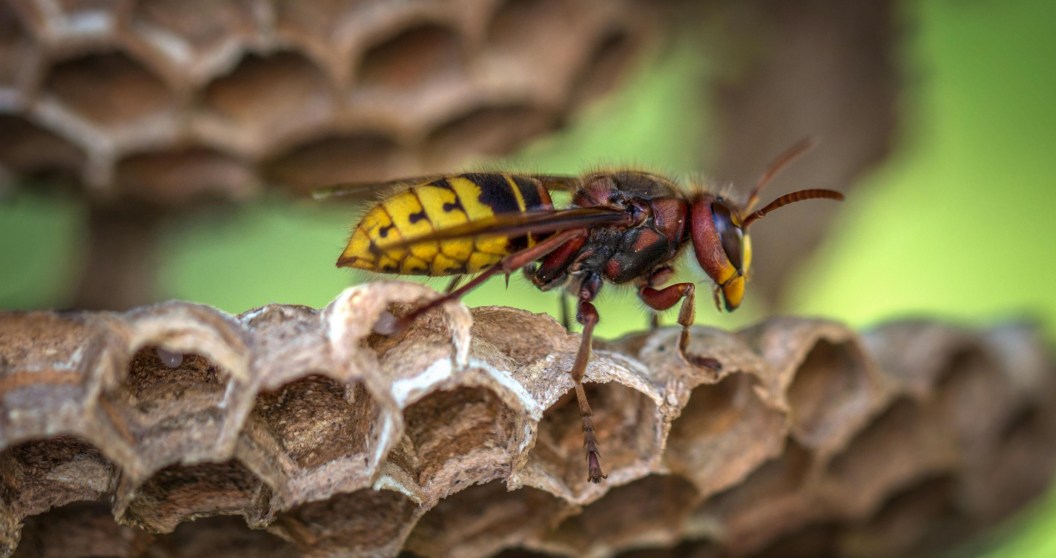
They wrote, "On July 3, 2025, Radiological Control Operation (RCO) discovered a wasp nest on a stanchion near 241-127F (adjacent to Tank 17) in a Controlled Area. The wasp nest was sprayed to kill the wasps. RCO probed the nest and discovered it was probing 100,000 disintegrations per minute/100 square centimeters beta/gamma."
Radioactive Wasp Nest
The organization also continued, "This contamination level is greater than 10 times the total contamination values in 10 Code of Federal Regulation 835 Appendix D. The wasp nest is considered an onsite legacy radioactive contamination not related to a loss of contamination control. The delay in reporting was to allow time for reviewing previous wildlife contamination for consistency in reporting criteria. No further action was required in the field. There is no impact from event on other activities and operations."
Separately, they confirmed that the nest was probing 100,000 dpm/100 cm2 beta/gamma. That's 10 times higher than recommended. Ultimately, they killed the wasp nest with spray. They also added, "Evaluation: No further action required in the field."
While it sounds like the wasp nest was eliminated, there's several questions here. For one, how did the wasps become radioactive in the first place? Tom Clements, executive director of watchdog group Savannah River Site Watch, told the Associated Press, that he was worried about the incident. He also said the report didn't explain what caused the insects to become radioactive.
"I'm as mad as a hornet that SRS didn't explain where the radioactive waste came from or if there is some kind of leak from the waste tanks that the public should be aware of," Clements told the AP.
That should be cause for concern.