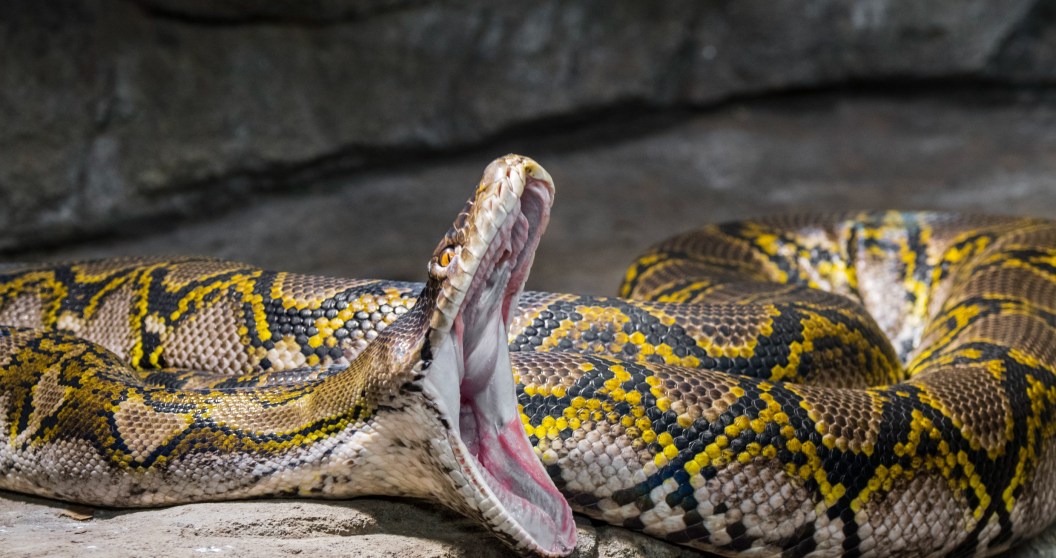
So far, hunters have removed more than 8,000 pounds of invasive pythons from Southwest Florida. This is part of an effort to remove Burmese pythons from the state.
The Conservancy of Southwest Florida removed nearly 200 snakes from a 200-mile area. The combined weight for the pythons was over 8,000 pounds, making for the heaviest haul in a year. That's four tons of snake! The state has long been fighting the invasive snake species.
"Without the Conservancy's continued removal efforts, these invasive predators would still be out there decimating native wildlife and reproducing across the landscape," said Rob Moher, the Conservancy's president and CEO. "Every python removed reduces pressure on the ecosystem."
"This was our first four-ton removal season," said Conservancy wildlife biologist and project manager Ian Bartoszek. "These science-based management efforts are suppressing local python reproduction. With continued pressure, we hope to see these removal numbers decline over time."
Pythons in Florida
Since 2013, they have removed 1,750 pythons Pin the state. These snakes are "humanely euthanized and necropsied."
Fish and Wildlife explain what's at stake in the state. They wrote, "Burmese pythons are not native to Florida and are considered an invasive species due to their impacts to native wildlife. Like all nonnative reptile species, Burmese pythons are not protected in Florida except by anti-cruelty law and can be humanely killed on private property with landowner permission. This species can be captured and humanely killed year-round and without a permit or hunting license on 32 Commission-managed lands in south Florida."
The organization continued, "Because of their large size, adult Burmese pythons have few predators, with humans being the exception. They prey upon native species and may reduce their populations locally. Research is underway to ascertain the impacts pythons have on native mammal species. While pythons will eat common native species and nonnative species such as Norway rats, they can also consume threatened or endangered native species. For instance, pythons have eaten endangered Key Largo wood rats."