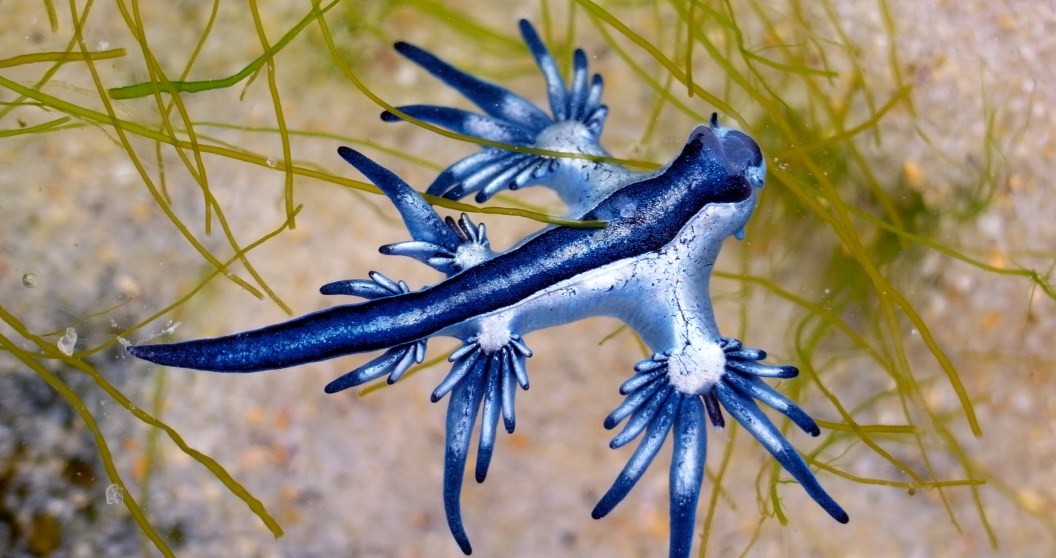
Officials are warning beachgoers after sea creatures with dangerous stings are washing up at a Texas beach. The Harte Research Institute has issued about blue glaucus, also called blue dragons. Although they look harmless, these tiny sea creatures have a dangerous sting.
"They feed on the tentacles of the man o' war and store the stinging cells in their appendages to release all at one time if they feel threatened," Jace Tunnell, a researcher from the Harte Research Institute (HRI), said in a HRI video shared to Facebook on March 12.
"It can really mess you up," he added. "I've heard it can sting maybe three times as bad as a man o' war. I find that hard to believe because on a scale of one to 10, I'd say a man o' war is about a nine on pain level. It's pretty bad, so the best thing is to avoid picking these things up."
Sea Creatures with a Sting
In a Facebook post, the Institute explained that they found several of these creatures washed up on the beach. Even if they are dead, they can still sting you. So it's best to be careful and keep a distance. Take a picture but do not touch.
The organization explained, "I found around 20 Blue Dragons (Glaucus atlanticus) washed up today along a short stretch of beach. These tiny creatures are absolutely stunning — but do NOT touch them. Blue Dragons are small sea slugs that float in the open ocean and feed on Portuguese man-o-war. The wild part? They store the man-o-war's stinging cells and concentrate them, which means their sting can be extremely painful. Even when washed up on the beach, they can still sting."
It also added, "Most Blue Dragons are only about 1-3 cm long, so they can easily be overlooked among other washed-up creatures. If you see one, take a photo — but look and don't touch."