
The idea that plastic is harmful to the environment is not new. For years, scientists have been warning us of the hidden dangers. They warned about how they contribute to climate change and how microplastics affect human and animal health alike. Specifically, we have heard how plastics and microplastics severely affect marine life. This is because the majority of our plastic ends up in our oceans. Now, some scientists are singing a different tune. Certain scientists are claiming we should stop trying to clean up plastic pollution in our oceans - but why?
Why Are Scientists Now Saying 'Don't Clean Plastic From Our Oceans'?
Getty Image
Naturally, after several years of being told that plastic is the enemy, people were surprised to hear that we shouldn't be cleaning it. Nevertheless, a small group of researchers is sticking to that opinion. Earth.com shared the details surrounding this new development. In it, they share that these researchers claim that plastic is more than just harmful litter.
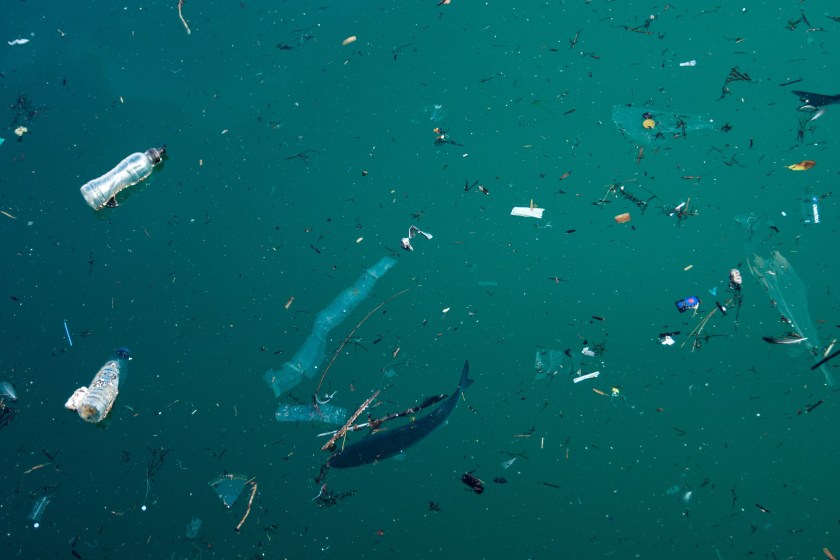
Rebecca Helm, a marine biologist, shared a new perspective on the plastic in our oceans. Additionally, the outlet claims that her perspective isn't random. Instead, "It's rooted in fresh observations about how certain sea organisms seem to have settled into their new environment." While this new idea hasn't been accepted widely yet, Helm and a few others argue that "a few organisms, collectively known as the neuston, appear to be using floating plastic as their new home."
What This Means Moving Forward
In case you are unfamiliar with the term, the neuston is "a group of living organisms that stay right on the surface of the water." Some examples include algae and bacteria. Due to their small size, they are nearly invisible and therefore receive little attention from people. However, small does not mean inconsequential. These tiny creatures are critical for the health of the entire ocean's ecosystem.
The outlet shares that "They help keep the food web running, take part in shifting gases between the atmosphere and the sea's watery depths, and break down dead matter that is floating around so that other life forms can use it." Without them, many necessary processes would not occur, or at least not properly. Although no one argues that the Great Pacific Garbage Patch is good, Helm argues that some organisms have adapted to it.
"Some of these cleanup projects have the potential to get rid of an entire ecosystem that we do not understand and that we may never be able to restore," Helm cautioned. Now, instead of rushing to remove all plastic from our oceans, Helm is suggesting that we slow down and take a calmer approach. She argues that we need to understand all of the implications before proceeding with a mass movement.