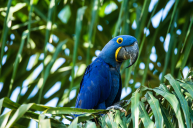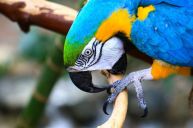

While blue and yellow macaws used to be a regular sight in the Brazilian city, they vanished long ago. Although pictures of them still line many streets and local establishments, deforestation wiped out most of the population. Now, people are rejoicing as blue and yellow macaws return to Rio after 200 years.
Blue And Yellow Macaws Finally Return To Rio
Getty Image
These poor birds had a tough go of things for a while. With deforestation running rampant and their natural predators — tapirs, jaguars, and peccaries — these birds found their populations dwindling. However, as the tropical forest began to heal, so did the blue and yellow macaw population.
The Guardian shared details about this epic return. Director of Tijunca National Park, Viviane Lasmar, shared how special the moment was when blue and yellow finally flashed across the sky once again. "For me, as the head of the park, it's special," she admitted. "But even more so as a carioca [someone from Rio]. It's a dream come true."
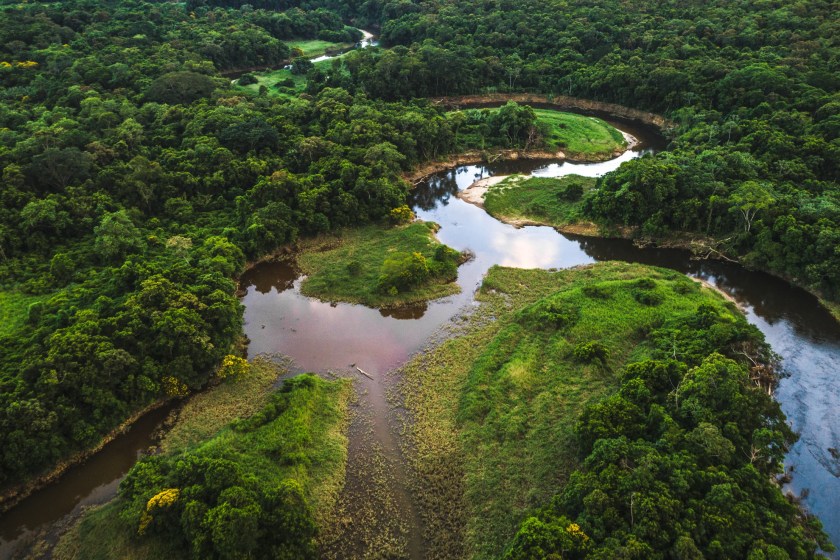
The national park is nearly 10,000 acres of lush rainforest. While it appears untouched and beautiful now, that was not always the case. The outlet shared that in the 19th century, "exploitation for commodities such as coffee and charcoal decimated the forest." Although initiatives later demanded the replanting of trees, a lot of the damage had already been done. The macaws that had not been lost to deforestation or natural predation were lost to wildlife traffickers who desired their colorful plumage.
Conservation Efforts Are Paying Off
Efforts to rebuild the forest have been paying off. This is most evidenced by the blue and yellow macaws' return to Rio. Although only four of these brilliant birds have been spotted so far, it lights a hope in conservationists' hearts that had almost gone out. Additionally, blue and yellow macaws are not the only species to be rejoining the lush rainforest.
The Guardian shared that "For the first time in centuries, giant rodents scuttle through the undergrowth, yellow-footed tortoises meander languidly, and howler monkeys swing through the trees." Most of this success comes from Refauna and their "refaunation" program. They are slowly reintroducing species to the rainforest that used to thrive there. In their eyes, they are correcting the wrongs of the past and bringing back animals that were meant to call this forest home.